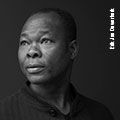



Zhang Ke
Architect Standardarchitecture
Biographical notes
Master of Architecture 1998, Harvard University, Graduate School of Design
Master of Architecture and Urban Design 1996, Tsinghua University, School of Architecture
Bachelor of Architecture 1993, Tsinghua University, School of Architecture
standardarchitecture is a leading new generation design firm engaged in practices of planning, architecture, landscape, and product design. Based on a wide range of realized buildings and landscapes in the past five years, it has emerged as the most critical and realistic practice among the youngest generation of Chinese architects and designers.
Consciously distance themselves from many of the other “typical” young generation architects who are swallowed by a trend of noise making, the office remain detached in a time of media frenzy and their focus is consistently positioned on the realization of urban visions and ideas. Although standardarchitecture’s built works often take exceptionally provocative visual results, their buildings and landscapes are always rooted in the historic and cultural settings with a degree of intellectual debate.
Founded by Zhang Ke in 2001, the office now has three partners: Zhang Ke, Zhang Hong, and Claudia Taborda.
Awards:
International Award Architecture in Stone, Winner, 2011
Design Vanguard (Architecture Record), 2010
WA Chinese Architecture Award, First Prize, 2010
China Architecture Media Award (CAMA), Best Young Architect Prize, 2008
WA Chinese Architecture Award, First Prize, 2006
www.standardarchitecture.cn
Master of Architecture 1998, Harvard University, Graduate School of Design
Master of Architecture and Urban Design 1996, Tsinghua University, School of Architecture
Bachelor of Architecture 1993, Tsinghua University, School of Architecture
standardarchitecture is a leading new generation design firm engaged in practices of planning, architecture, landscape, and product design. Based on a wide range of realized buildings and landscapes in the past five years, it has emerged as the most critical and realistic practice among the youngest generation of Chinese architects and designers.
Consciously distance themselves from many of the other “typical” young generation architects who are swallowed by a trend of noise making, the office remain detached in a time of media frenzy and their focus is consistently positioned on the realization of urban visions and ideas. Although standardarchitecture’s built works often take exceptionally provocative visual results, their buildings and landscapes are always rooted in the historic and cultural settings with a degree of intellectual debate.
Founded by Zhang Ke in 2001, the office now has three partners: Zhang Ke, Zhang Hong, and Claudia Taborda.
Awards:
International Award Architecture in Stone, Winner, 2011
Design Vanguard (Architecture Record), 2010
WA Chinese Architecture Award, First Prize, 2010
China Architecture Media Award (CAMA), Best Young Architect Prize, 2008
WA Chinese Architecture Award, First Prize, 2006
www.standardarchitecture.cn