Protagonists

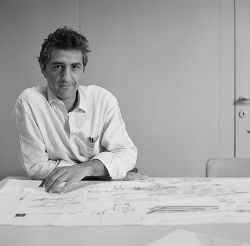
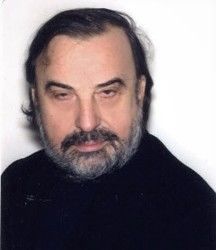
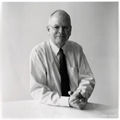
Valerio Castelli

Design Library

Biographical notes
1972 He graduated in Architecture from Milan Polytechnic.

1972 -1984 He founded and directed CentroKappa, a multidisciplinary consulting firm in the field of business communication. During this period he collaborated with a number of young designers at Centrokappa including Michele De lucchi, Alberto Meda, Paola Navone and Franco Raggi.
1977 He invented the name and brand Flou, remaining its art director until 2005.
1977   Together with Alessandro Mendini he founded the design magazine Modo, filling the role of art director for five years.
1979 With Centrokappa he won the Compasso d’oro award for design research and promotion of Italian design.
1983  Together with Maria Grazia Mazzocchi and Alessandro Guerriero he founded the first postgraduate design school Domus Academy.

1984- 2006 Partner and CEO of Garage, one of the most highly acclaimed communication and multimedia event companies in Italy.

1995-2000  In parallel with his work at Garage, he was a founding partner and chairman of Orchestra, one of the leading new Italian media agencies. The company was sold at its peak to Inferentia Group, which immediately afterwards was launched on the stock market in the new economy list.

2001-2003  CEO of Domus Academy, the school he had founded twenty years earlier.
1999- 2010 Together with Kartell and Finartemide, he founded Design-Italia spa for the construction of the first Internet Portal devoted to Italian design, serving as CEO and Editor.

2004-2008  He worked as art director for Olivetti, in charge of new product and corporate identity design. His machine design team included a number of leading international designers such as Ideo, James Irvine, Alberto Meda, Jasper Morrison and Francisco Gomez Paz.

since 2006 He founded the Design Library, the first library entirely devoted to design.

Today he continues his activities as cultural director of the Design Library. He also works as a freelance design management consultant for design-driven companies and institutions.

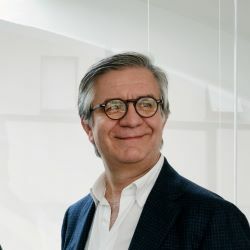
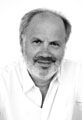
Giovanni Chiaramonte

Photographer
Biographical notes
Giovanni Chiaramonte was born in 1948 in Varese to parents from the Sicilian town of Gela. The main theme of his work is the relationship between place and destiny in western civilisation, explored in dozens of monographs and personal exhibitions in venues such as Studio Marconi,  Triennale in Milan, the Venice Biennale and Hunter College in New York.
He has launched and edited series of photographic books for Jaca Book, Federico Motta Editore, S.E.I., Edizioni della Meridiana and Ultreya/Itaca.
He teaches history and theory of photography at the IULM University of Milan and on the FORMA foundation’s Masters course.
He runs photography workshops at the Faculty of Architecture of Cesena.
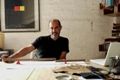
João Luís Carrilho da Graça

Architect

Biographical notes
João Luís Carrilho da Graça, architect, graduated from Escola Superior de Belas Artes de Lisboa in 1977, the year he initiated his professional practice.
Lecturer at the School of Architecture of the Technical University of Lisbon between 1977 and 1992. Professor at the Universidade Autónoma de Lisboa from 2001 to 2010 and at the Universidade de Évora since 2005. Hheaded the architecture department at both institutions until 2010. Guest lecturer at the Escuela Técnica Superior de Arquitectura de la Universidad de Navarra in 2005, 2007 and 2010. Invited to lecture in seminars and conferences at several international universities and institutions.
His body of work has been recognized with several awards, including: the title of “Chevalier des Arts et des Lettres” by the French Republic in 2010; the “Prémio Pessoa” in 2008, the “Luzboa” Award in 2004 at Lisbon’s first International Light Art Biennale, the “order of merit” by the Portuguese Republic in 1999 and the “Aica Award” by the International Association of Art Critics in 1992.

Distinguished with the “AIT Aaward 2012 - transportation” for the pedestrian bridge over the Carpinteira stream, the “Piranesi Prix de Rome” prize in 2010 for the musealization of the “Praça Nova” archeological site at “Castelo de São Jorge”, the “FAD” prize in 1999 and the “Valmor” prize in 1998 for the knowledge of the seas pavilion at Lisbon Expo ’98; the “Secil” prize in 1994 for the Higher School of Social Communication (Instituto Politécnico de Lisboa), and nominations for the “Mies Van Der Rohe” European Architecture Award in 1990, 1992, 1994, 2009, 2010 and 2011, the latter for both the pedestrian bridge over the Carpinteira stream and the musealization of the “Praça Nova” archeological site at “Castelo de São Jorge”.
In 2010 the project Candeias’ House was part of the Portuguese official representation, “no place like - 4 houses 4 films”, at the 12th international architecture exhibition - la Biennale di Venezia “people meet in architecture”.

Elio Caccavale

Designer and Professor at the Glasgow School of Art
Biographical notes
Elio Caccavale was born in 1975 in Naples, Italy. He studied Product
Design at Glasgow School of Art before going on to the Royal College
of Art to complete a Masters degree in Design Products.
His research investigates design, life sciences and bioethics partnerships, with particular emphasis upon collaborative research methods. His projects include, Utility Pets, a series of speculative products investigating the ethical consequences of xenotransplantation - the transplantation of animal organs into humans (2003); MyBio, a collection of educational soft toys exploring social, cultural, and personal responses to the strange and different in
human biology and in possible transhuman creatures (2005); Neuroscope, an interactive toy linked to a culture of brain cells, which are cared for in
a distant laboratory (2008); and Future Families, a collection of speculative products investigating social, cultural and ethical issues surrounding
assisted conception and surrogacy (2011).
Elio has contributed to research projects supported by Wellcome Trust, Art Council England and the Engineering and Physical Sciences Research Council. He is the co-author of Creative Encounters (Wellcome Trust, 2008), a book that explores the many opportunities and questions provided and prompted by collaborations between artists, designers, educators
and scientists.
He is responsible for the core program in Product Design at Glasgow School of Art and he is visiting lecturer on the MA Design Interactions course at the Royal College of Art. Prior to joining Glasgow School of Art, he was the
founder and director of the MSc in Product Design at the University of Dundee. In addition, he holds a visiting professorship at Staatliche Hochschule fur Gestaltung Karlsruhe and an honorary professorship at Hubei University of Technology. He has held lecturing positions at Central Saint Martins College of Art and Design, Architectural Association, Metropolitan University and research positions at Newcastle University in the Policy, Ethics and Life Sciences
Research Centre, Reading University in the School of System Engineering
(Cybernetics) and Imperial College in the Institute of Biomedical Engineering.
Elio regularly presents at conferences internationally and his work has been exhibited extensively, including at the Museum of Modern Art in New York, the Design Museum (Triennale) in Milan, the Science Museum in London, the National Taiwan Museum of Fine Arts in Tapei, the Design and Applied Arts Museum in Lausanne, the Royal Institution in London and the Israel Museum in Jerusalem. His work is in the permanent collection of MoMA in New York and has been published by Phaidon, Thames & Hudson, Die Gestalten
Verlag dgv, MIT Press and Centre Pompidou.
Elio is the founder of Elio Caccavale Design Studio, a design studio working across a wide variety of projects, including electronics and forecasting
research. The studio has worked with a wide portfolio of clients including Mattel, Dmagic Mobile China, Orange, French Telecom, PBJ Japan and
LG Electronics.

Aldo Colonetti

Scientific curator

Orazio Carpenzano

Professor Faculty of Architecture - University of Rome La Sapienza
Biographical notes
Professor of Design at the School of architecture in Rome. President of the Committee on the development of image, communication and coordination of cultural activities of the School of architecture.
Member of the College of Graduate School Research Professors in Architectural-Theoretical composition of architecture and a member of the Department of Architecture and Design.
In 1990 founded the architecture firm Urbanlab with Alessandra Capuano in Rome.
An architecture firm based in Rome which has always tried to strike a balance between theoretical and experimental design, expressed through projects, competitions, installations and research.
With over twenty years’ experience, the partners, coming from various professional and cultural backgrounds, have developed a multidisciplinary organization able to draw on specific knowledge for both small and large scale projects. In particular, the firm deals with areas related to urban projects, landscaping, integration between new and existing structures, interior design and furnishing.
Participation in competitions, individually, as an associated studio and also in collaboration with other groups, received awards, honors and tributes. Various projects exhibited at the Venice Biennale and in exhibitions in Rome, Barcelona and Delft.
Projects and articles appearing in various publications and national and international magazines.
Consulting activities for the Mission of Technical Structures of the Italian Prime Minister; member of the Technical Advisory Commission on projects for the 150 anniversary of the unification of Italy.
Between 2009 and 2010 oversaw some important projects at the Maddalena G8 Conference, including the Main Conference and Delegate Areas designed by Boeri.
Currently coordinating the preliminary, definitive and operational architectural design, for the Fiumicino transportation distribution hub in Rome.
In addition to conducting urban design research focused mainly on the contemporary interpretation of the city, has also embarked on more complex and unique connections between creative processes and new technologies. Since 2002, has conceived and produced studies such as Physico, Sylvatica, Pycta and Hallalunalalone for ALTROEQUIPE, and is still conducting research based on the interaction between motion, sound, architecture and technologies of motion capture and motion graphics.
From 2000 to 2007 directed the Quasar Institute in Rome (high school and advanced studies in design).
Author of numerous essays on the topics of theories and techniques of architectural design.
Involved in scientific research articulated in two main areas: theoretical research, conducted through the departmental theoretical laboratory and another of design nature conducted through the departmental design laboratory, both of Diar. The first, focused on studies and research, has resulted in publications and conferences and seminars often interdisciplinary in character. The second, mostly experimental, has produced architectural and urban projects especially in the Rome area (textual and contextual reference). Participation in several national and international architecture competitions and as a tutor has coordinated numerous design workshops in Italy and abroad.
Collaborator with several trade magazines. Former editor of the magazine “Capitolium” and of the series “GROMA” and “DAAC”.
Author (along with other publications) of:
5 idee per Pietralata
Workshop di progettazione_Dottorato di Ricerca in Composizione Architettonica Teorie dell'Architettura
Centro Stampa Università, Roma 2007.
MODERNOCONTEMPORANEO written with Ludovico Quaroni
Final edition by Orazio Carpenzano and Fabrizio Toppetti, Gangemi Editore, Roma 2006.
Laboratorio di progettazione 2 - Gangemi Editore, Roma 2004.
Physico. Fusione tra danza e architettura di Carpenzano Orazio, Latour Lucia, Testo & Immagine, Torino 2003.
Lo scambio del limite. Sintesi di una ricerca più ampia, Gangemi Editore, Roma 2003
Porte metropolitane per Roma, Palombi Editore, Roma 2002.
Libere imitazioni, Palombi Roma 1997.
Ore marine, Sala Editore, Pescara 1996.
Idea immagine architettura. Tecniche di invenzione architettonica e composizione, Gangemi Editore, Roma 1993.

Giovanni Carapella

Chairman Formedil
Biographical notes
Giovanni Carapella, 57, is an architect.
From 1983 to 1990 he taught design at CEFME (Centro per la Formazione delle Maestranze Edili ed Affini di Roma e Provincia) in Pomezia. Since 1990 he has held the position of Director of FORMEDIL, and has also been responsible for coordinating national, European and international projects funded as part of community programmes and initiatives.
From 1996 to 2005 he was a Member of the Coordination Group of the European network RE.FORM.E., network for training and restoration in Europe, consisting of training organisations from France, Holland, Spain, Italy, Portugal and Germany. During this period he also headed a group of European experts set up to study the transparency of certifications in the field of training and professionalism of workers, with particular reference to the restoration sector. He took part as an expert designated by the Council of Europe, Direction de l’enseignement ,de la culture et du sport, Service du Patrimoine Culturel in the Atelier professionnel portant sur la formation aux métiers du bati ancien et du patrimoine culturel – Bucharest, 23 - 27 June 1999.
His publications include:
2007 Lavorare in sicurezza, il cantiere edile – Sapere 2000
2001 Il cantiere scuola nell’esperienza italiana, in La macchina di pietra, Comune di Napoli Sviluppo Italia, Napoli 2001.
2000  L’impresa del restauro, in Speciale Vecchi Mestieri in edilizia, in Bollettino n.369 ITALIA NOSTRA Rome.
1999 La formazione ai mestieri della pietra e del marmo, in  Il Travertino romano, published by Sapere 2000 Rome.
1997 Formazione dei formatori  per il restauro: laterizio e terracotta, concept and editorial coordination of the multilingual interactive CD-ROM produced by the Reforme network as part of a specific Leonardo da Vinci pilot project.
1996 Concept and editorial coordination of the Guida internazionale agli scambi e ai gemellaggi of the training centres of the Reforme network, published by Sapere 2000, Rome.
1996 Formazione per il restauro: laterizio e terracotta, interactive CD-ROM produced by intecs sistemi spa.
1995 Il laterizio e la terra cotta - materiali per la formazione al restauro, with C.Cigarini and G. Conti, FORMEDIL.
1994 L’ABC dell’Edilizia: corso di lingua italiana per lavoratori stranieri del settore delle costruzioni, published by Sapere 2000, Rome – coordination of the editorial project and method for construction of technical linguistic prototypes.
1993 Il cantiere scuola nella formazione per il restauro, in Restauro dell’architettura e formazione professionale, published by Giunti Firenze.
1992 La formazione professionale dei posatori di pavimenti dei rivestimenti ceramici, in CERAMICA ACTA n. 1/93, Bologna.
1991 Il ruolo della formazione professionale per l’inserimento di lavoratori extracomunitari in edilizia, in I lavoratori extracomunitari in edilizia, published by Formedil, Rome.

Emilio Caravatti

Architect
Biographical Notes
After several years of cantilever begins to study architecture and graduates in 1989. Since 1994 he is active in architecture, and in the same year he opens his own office near Milan in Monza where he still lives and works. He is busy with public projects and competitions, furthermore his works aim to realize some collaboration with west African countries. The uniqueness of his approach to the human-urban interrelation in architecture lies, among other, in enabling the workers employed in the construction of these objects to obtain, apart from the wages, some additional knowledge connected to the object they are building. The results are the After-school Community Centre in Bobodioulassò (Burkina Faso) a Neighbourhood Library in Katì-Cokò a Community school in N’tyeani village (Republic of Mali) (Biennal Architecture Prize ARCHES 2006) and 1° prize in International Competition for New Cathedral in Bamako (Republic of Mali 2004). After having completed a number of community projects in western Africa in 2006 he founded the NGO association AFRICABOUGOU onlus a multi-disciplinary association that goals are to continue responding to needs expressed by the local populations and transform these into joint projects, especially in the fields of education and community facilities. For his project “Public infrastructures in Beledougou”, on progress at the moment, won Special prize at Brick AWARD 2010 in Wien and a special mention in Gold Medal for Italian architecture 2009.
At the same time he is teaching Architectonic Planning at the Politecnico University of Milan and in a course about the architectural project in marginality areas (2007-2009). Among his works we remind:one family house in Marciana Marina Isola d’Elba (LI) 2002, the widening of the town hall in Olgiate Molgora, a dwellings building in Cesano Maderno (MI), a Cultural Center in Albiate (MI); FIRST PRIZE at national competition for Town Hall in S. Giorgio su Legnano MI (2001) Sporting Centre Pizzighettone CR (2004) for the new Culture Campus in Vercelli (2008) and for a Sporting hall in Grosio SO. Actually under constructions; Center of physical rehabilitation in Republic of Mali, a new housing complex in Zalau (Rumania) the Culture Campus in Vercelli (University library, new Civic Library and public spaces) and the new school at Fansirà Corò village also in Republic of Mali.His work has been shown in several exhibitions and magazines.