Protagonists

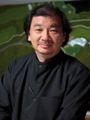
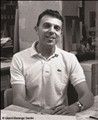
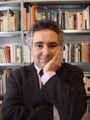
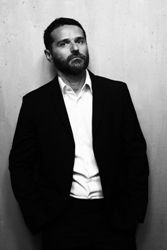
Shigeru Ban

Architect
Biographical notes
Shigeru Ban, who was born in Tokyo in 1957, attended at Southern California Institute of Architecture and graduated from Cooper Union School of Architecture in 1984. In 1985, he established Shigeru Ban Architects, a private practice in Tokyo. In 1995, He started working as a consultant of the United Nations High Commissioner for Refugees and at the same time established an NGO, Voluntary Architects’ Network (VAN) in 1995. Renowned for his works with innovative ideas such as “Curtain Wall House”, “Japan Pavilion Hannover EXPO 2000”, “Nicolas G. Hayek Center”, “Centre Pompidou-Metz”, he is today based in his three offices at Tokyo, New York and Paris. Meanwhile, he contributes his knowledge, skills and energy for the disaster relief projects such as Paper Log House (Kobe of Japan in 1995, Turkey in 2000, India in 2002), Paper Church (Kobe,1995), Temporary Elementary School (Chengdu, China 2008) and Container Temporary Housing (Onagawa, Japan in 2011)  He has been awarded a number of prizes, including Thomas Jefferson Foundation Medal in Architecture (2005), l’Ordre des Arts et des Lettres in France (2010) and Auguste Perret Prize(2011).  Jury of Pritzker Architecture Prize from 2007 to 2009, Professor at Keio University, Japan from 2001 to 2008, Visiting Professor of Harvard University Graduate School of Design, Visiting Professor of Cornell University(2010), and Professor of Kyoto University of Art and Design from 2011.

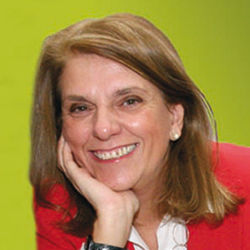
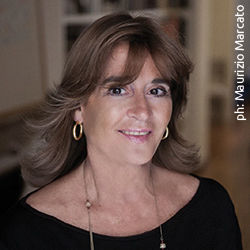
Cini Boeri

Architect and Designer

Biographical notes
Cini Boeri graduated from Milan Polytechnic in 1951. After a brief collaboration with Gio Ponti’s practice, she worked for many years at the firm of Marco Zanuso.
She started up her own practice in 1963, concentrating on civil architecture and industrial design.
She has designed single-family houses, apartments, museum exhibits, offices and shops in Italy and abroad, devoting a great deal of attention to the functionality of space and the psychological relationships between humans and the environment. Her work in the field of industrial design has focused in particular on furnishing elements and building components.
She has given conferences and lectures at a number of universities in Italy and abroad, including Berkeley, Barcelona, the Nucleo del Deseno Industrial in São Paulo, the College of Architects of Rio de Janeiro, the Cranbrook School in Detroit, the Southern California Institute of Architecture in Vico Marcote, Switzerland, and Pacific Design Center and UCLA in Los Angeles.
From 1981 to 1983 she led courses in architectural design and industrial and furnishing design at Milan Polytechnic’s Architecture faculty.
She was a member of the Board of Directors of the XVI Triennale in Milan and has been on the jury of numerous international competitions.

AWARDS AND RECOGNITIONS:
Milan, Compasso d’Oro, mention (1970), Milan, Premio Compasso d’Oro, Strips (1979), Ljubljana, gold medal for “Rever” door, BIO 10 (X Bienniale Disegno Industriale) (1984), Stuttgart, Design Center Stuttgart, Design ‘85 award for the Prisma collection (1984), New York, Roscoe Prize (1984).
Stuttgart, Design-Auswahl ‘90 (1990), Milan, Medaglia d’oro “Apostolo del Design”, Sala Puricelli, Fiera di Milano - Rima Editrice (2003), Milan, Dama d’Argento award “Gli uomini e le donne che fanno grande Milano - I Maestri del Design” Spazio Ferrè - Associazione Amici del Museo Poldi Pezzoli (2006), Milan, “Milano Donna” award, Palazzo Reale, Sala delle Cariatidi (2007), Florence, “Piramidi dell’Accademia Italiana” award, Teatro Saschall, Accademia Italiana (2008), Los Angeles, The IIC Lifetime Achievement Award from the Italian Cultural Institute (2008), Chicago, Good Design Award (2008), Rome, XXII Compasso d’ Oro ADI, Compasso alla Carriera (2011), Rome, Order of Merit of the Italian Republic, nominated Grand Officer of the Republic (2011)

PUBLICATIONS:
Le dimensioni umane dell’abitazione, Franco Angeli editore, Milan 1980
essay, La dimensione del domestico, in M. Bertoldini (editor), La casa tra tecniche e sogno, Franco Angeli editore, Milan 1988
essay, Progettista a committente, in Struttura e percorsi dell’atto progettuale, Città Studi, Milan 1991
C. Avogadro (editor), Cini Boeri, architetto e designer, Silvana Editoriale, Milan 2004

Renaud Batier

Director of Cerame-Unie
Biographical notes
Renaud Batier graduated in Law from the law faculty of Poitiers in France in 1997 and specialised in European Union Business Law at the Amsterdam Law School in 1997-1998.  He came to Brussels in 1998 to work in the field of Competition law with British law firm Hammond’s and performed an internship at the European Commission in DG Trade (Anti-dumping).  In 2002, Mr. Batier joined the Association of European Producers of Steel for Packaging (APEAL) as the EU Public Affairs Manager.   Since March 2007, he has been working for Cerame-Unie, the European Ceramic Industry Association, first as Senior Adviser and since September 2008 and as Managing Director.  As such, he has been coordinating the representation of the European ceramic industry in Brussels in the areas of trade, energy and environmental regulatory matters.

Liliana Bazzanella

Professor Turin Polytechnic
Biographical notes
Architect, lecturer in architectural technology and director of the Architectural and Industrial Design department of the Polytechnic of Turin.
During her many years of research and teaching, she has been involved in architectural projects at many levels, frequently as part of multidisciplinary groups. These range from the territorial level of large-scale architecture, the landscape and the built environment through to the smaller-scale level of detail, of the language and art of good building practices. Her main field of activity, often on commission from public authorities, is the redevelopment of the fabric of city suburbs, remediation of abandoned industrial areas, the potential and criticality of urban sprawl, and the architecture of infrastructures as the driver of transformations in living spaces. She has constantly sought to dialogue with other disciplinary areas, and alongside the figures habitually involved in architectural design – structural engineers, physicists, urban planners and evaluators – has sought the contributions of geographers, sociologists and road traffic experts in a relationship that has now been continuing for a decade as part of European and national programmes, and of the world of education through the involvement of numerous artists and lecturers at visual arts academies. She has published books and articles in Italy and abroad.

Mauro Bazzi

Swiss Tile Association
Biographical notes
Mauro Bazzi, 52, is owner and director of Bazzi Piastrelle, Locarno (Switzerland)
member of honour of the SPV, Swiss Tile Association.
www.bazzi.ch
www.plattenverband.ch

Marcello Balzani

Scientific Director, Construction Platform Emilia Romagna advanced technology network
Biographical notes
Marcello Balzani was born in Forlì, Italy on 5 August 1962. He is associate professor at the Department of Architecture of the University of Ferrara and has also taught at the universities of Florence and Ferrara.  As Director of the DIAPReM (Development of Integrated Automatic Procedures for Restoration of Monuments) centre of the University of Ferrara, he is responsible for dozens of national and international research projects in various archaeological areas (Pompei, Benevento and Rome) and monumental contexts (in Italy: Piazza dei Miracoli in Pisa, Michelangelo in Florence, Leon Battista Alberti in Mantova, Ferrara, Florence and Rimini; internationally: in the fortified citadel of Gozo in Malta, in Mexico City, Cairo and Salvador de Bahia), as well as in smaller Italian towns throughout the country. Since his appointment as director, he has overseen agreements with research centres, ministries, archaeological heritage offices and study centres, and has led DIAPReM to undertake scientific and industrial partnerships and training agreements in Italy and abroad. Since June 2008 he has held the position of Vice Director of the Architecture Department of the University of Ferrara. In March 2010 he was appointed Scientific Director of the TekneHub Laboratory of the University of Ferrara Technopole, part of the Regione Emilia-Romagna High-Technology Network Construction Platform, and in October Scientific Director of the Constructions Platform. He is a member of the Italian Design Union, the National Urban Planning Institute  and the Focus Area Cultural Heritage, Horizontal Issue “Archaeology”, of the European Construction Technology Platform. He has been a jury member and jury chairman for national and international architecture competitions and awards, including the “Innovazione e Qualità Urbana” award, the “International Prize for Sustainable Architecture”, and the “International Domus Restoration and Preservation Prize”, which he helped found and support. He is associated with the “Architettura>Energia” Centre of the Department of Architecture of the University of Ferrara and is scientific director of WebgisLab of the Consorzio Ferrara Ricerche. He is editor of the architecture magazines Paesaggio Urbano and Architetti, idee cultura e progetto.
marcello.balzani@unife.it

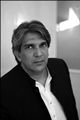
Giorgio Bianchi

Senior Partner RPBW
Biographical notes
Born in 1957, he studied architecture at Genoa University. Between 1986 and 1994 he worked in the Genoa office on most of the major projects of that time including the rehabilitation of Genoa harbour. In 1995 he joined the Paris office and became a partner in 1997. He was in charge of the Morgan Library expansion project in New York and is currently working on the Stavros Niarchos Foundation Cultural Center in Athens.

Jain Bijoy

Mumbai studio (India)

Biographical notes
Bijoy Jain was born in Mumbai, India in 1965 and received his M. Arch from Washington University in St Louis, USA in 1990. He worked in Los Angeles and London between 1989 and 1995 and returned to India in 1995 to found his practice.

Studio Mumbai is a human infrastructure of skilled craftsmen and architects who design and build the work directly. Gathered through time, this group shares an environment created from an iterative process, where ideas are explored through the production of large-scale mock-ups, models, material studies, sketches and drawings. Here projects are developed through careful consideration of place and a practice that draws from traditional skills, local building techniques, materials, and an ingenuity arising from limited resources.

The essence of the work lies in the relationship between land and architecture. The endeavor is to show the genuine possibility in creating buildings that emerge through a process of collective dialog, a face-to-face sharing of knowledge through imagination, intimacy, and modesty.